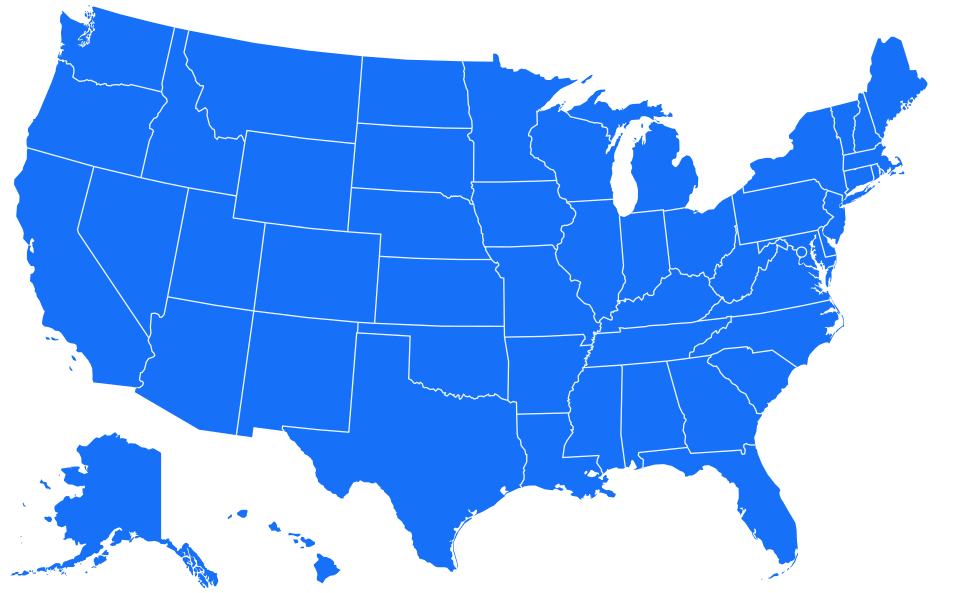











Choose the place
Begin with the city or state that matches your search instead of relying on a national average.
Mortgage topic guide
Follow dated housing evidence for the places you are considering, then connect prices, supply, taxes, insurance, and financing conditions to your own monthly budget.
A local headline is only a starting point. The useful questions are when the data was measured, which geography it covers, and whether it describes asking prices, closed sales, inventory, or a broader economic signal.
Use these updates to narrow the facts worth checking before you make an offer or revisit a loan. A citywide trend cannot predict one property, so compare current listings, property-specific costs, and a reviewed financing scenario before acting.
Read several measures together instead of treating one number as a verdict. Rising inventory may give buyers more choice, but its practical effect depends on price range, neighborhood, property type, condition, and seller expectations. A median price can move because the mix of homes sold changed, even when the value of a particular home did not move by the same amount. Days on market can also hide relistings or large differences between entry-level and luxury properties. Use the reported trend to form questions for current listings and recent comparable sales, not to predict an automatic discount or appreciation rate.
Turn market research into a property-level worksheet once a home makes your shortlist. Record the asking price, likely down payment, estimated taxes, insurance quote, association dues, known assessments, utilities, and a maintenance allowance. Note whether the tax bill could reset after a sale and whether an insurance estimate reflects the home's age, construction, roof, hazards, and desired coverage. Then test more than one interest-rate and down-payment scenario. This step reveals whether a market that appears affordable in broad statistics still fits your monthly comfort and available cash.
Keep timing in perspective. Published housing data often describes contracts or closings that began weeks earlier, while available loan pricing and the homes for sale today can change faster. Recheck important figures when you are ready to make an offer, lock a rate, or choose between properties. Ask a local real estate professional about current competition and property condition, and ask a licensed loan officer for a reviewed financing scenario. The goal is not to forecast the market perfectly; it is to make a decision that remains workable if price, rate, taxes, or insurance differ from the first estimate.
The same loan amount can feel very different across markets once property taxes, homeowners insurance, association dues, inventory, and price movement enter the payment. Dated local evidence helps you identify which assumptions need a fresh check.
Use general mortgage information to build a plan around the borrower and property.
Begin with the city or state that matches your search instead of relying on a national average.
Read the as-of date and source before carrying a market figure into your budget.
Open Austin mortgage market update: payments, price trends, and offer planningTest the home price and local ownership costs together, then leave room for property-specific changes.
Open Mortgage Payment CalculatorSeparate list-price movement from closed-sale evidence, and read inventory or time-on-market measures in their stated period.
Check taxes, insurance, association dues, and assessments for the actual property and jurisdiction.
Compare rate, APR, cash to close, and payment assumptions for your scenario rather than treating a market trend as a loan quote.
Article
Austin buyers can use dated rate, home-price, and household-cost evidence to pressure-test a payment plan without mistaking broad market data for a quote or a live listing report.
Article
Irvine buyers should verify Orange County's current conforming limit before labeling a loan jumbo, then compare rate, APR, reserves, insurance, and documentation across matched offers.
Article
Tampa homeowners comparing a refinance should reprice homeowners and flood coverage, verify escrow assumptions, and measure closing costs and term changes alongside any principal-and-interest reduction.